North Iowa Photo Club
  • Home
  • About the Club
  • Resources
  • Events
  • For Sale
  • Contact
  • Blog

Viewing the Northern Lights - Aurora

9/28/2016

3 Comments

 
Picture
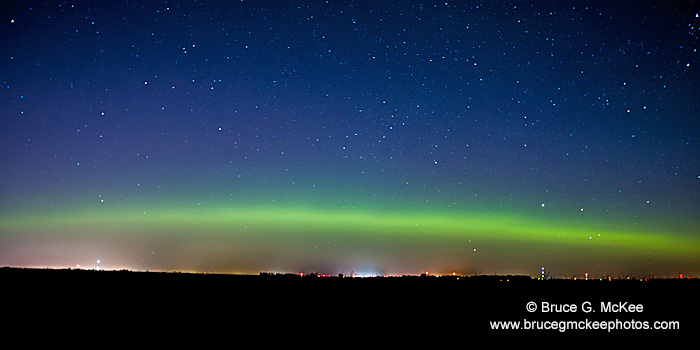
Northern Lights over Mason City, IA, 9/19/2016 9:41 pm, 30mm, ISO 1000, f/2.8, 25 seconds

Seeing the Northern Lights or Aurora Borealis in North Iowa is not a common event, but it is so sweet when we do get to see them. I won't go in to all of the details of what causes the auroras, (you can do your own research) except to say that accurate predictions of more than about 45 minutes are difficult. There are numerous Aurora Alerts web sites, Twitter feeds and Facebook pages where you can get alerts and notices of Aurora activity. Of course it needs to be dark and few or no clouds to the north. If there is a bright Moon it can wash out out the sky and make event bright Northern Lights difficult to see.
As you look at the charts and graphs on the web sites there are a few things that you need to know to determine if the lights are a possibility in your area.
A 'Kp index' of 6 (G2) or higher is usually necessary for North Iowa.
On the Bz chart a negative number or 'South' is a good thing. -3 is better than -2.
Watch for indicators that it is possible to see Aurora at middle latitudes.
Many sites display the time zone as UTC or UT for Universal Time. At this time of year Iowa is -5 UT. So 05:00UT or 5:00 AM would be Midnight here in Central Daylight time (CDT). 02:00UT would be 9:00 PM the previous day. When we are no longer on daylight savings time (CST)  Iowa will be -6UT.

A few Aurora Alerts Web Sites:
  • Aurora Forecast
  • Softserve News Aurora Forecast
  • Space Weather Live 
  • Aurora Alerts - Facebook site
  • Great Lakes Aurora Hunters FB Group (request to join)
  • Aurora Alerts on Twitter
  • KP Aurora Alerts on Twitter
  • Long list of Aurora Alerts sites

Photographing the Aurora:
Put the camera on a sturdy tripod. Full manual settings - manual focus on the lens focused on infinity or a very distant object, manual exposure. ISO from 400-3200 depending on how bright the lights, f/stop 2.8 or wider if your lens will allow, exposure time will vary from a few to several seconds. You'll have to experiment. Every night will be different. Sometimes they are barely visible to the naked eye, and can only be seen well in the camera with a longer time exposure. On rare occasions they are bright enough to shoot a video. If you see Northern Lights don't expect them to last long. They could last only a few minutes or several hours. There is no way to know. Or they could start and stop multiple times during the night or in to the early morning.
Good Luck. I hope that you get to see and photograph the Northern Lights!
- by Bruce McKee
3 Comments

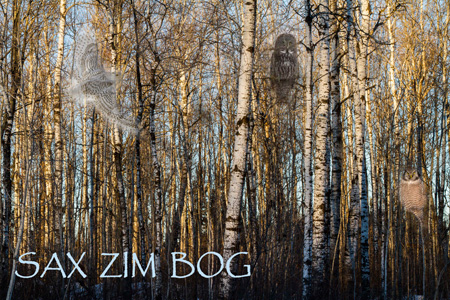
SAX-ZIM BOG

2/5/2014

1 Comment

 
Picture
By Jack Vanden Heuvel

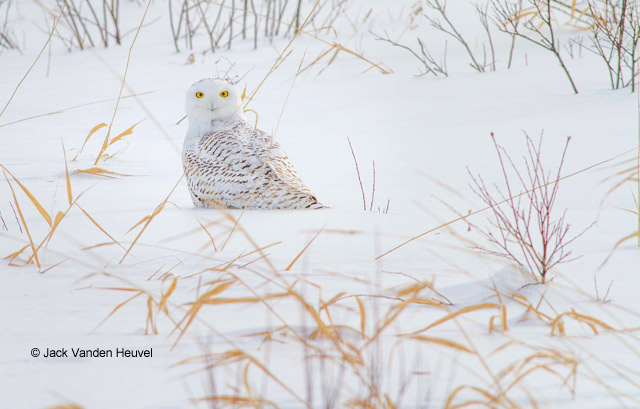
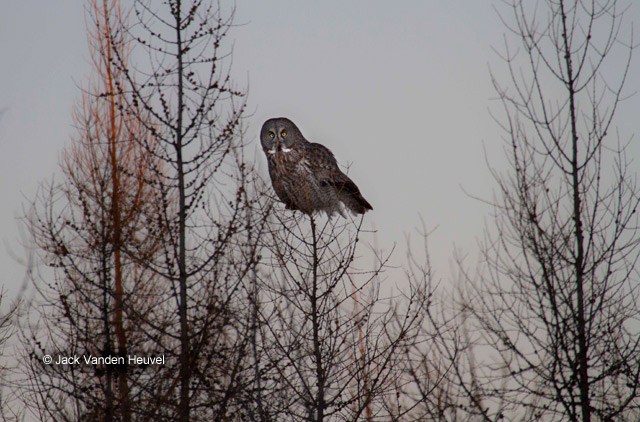
I just spent a couple days at the Sax Zim Bog in late January, 2014, doing photography.  Bruce asked me to give a report.  Located NW of Duluth, MN, it is a favorite place for those doing bird photography, especially of Great Gray, Snowy, and Northern Hawk Owls.  They also have feeders up to attract smaller birds such as the boreal chickadees and gray jays.

These are not tame birds, and it is a big area, so it is still not a sure thing.  I got good photos of a Snowy Owl and a Northern Hawk Owl.  I had three sightings of Great Grays, but that was rougher, since it was low light, and I was shooting fast with a high ISO.

Finding them is something you work on by yourself, but it is also helpful to find others who have stopped their cars because they are seeing something.  It is like the Yellowstone bear jams, only not that bad.  I really do appreciate other people’s eyes finding those owls.

It is pretty easy to get something of Snowy’s since once you find one they will hang out from a few perch places for hours.  I had not seen a Snowy since the 50s, so I had a great time simply watching this beautiful bird for hours!  They are so beautiful.  Their hunting ability is incredible.  They can spot a vole way in the distance, and go down there immediately and nail it!  Same for the Hawk owl!

Great Grays I still am after.  They are the largest of all owls.  I photographed one once by the Claybanks in Iowa with slide film many years ago.  It was exciting for me to actually see one again, and then to have three sightings!  BUT I only got to see them in the low light of early morning and late evening.

Although many of the photo people used tripods, I usually used a bean bag on the window of my car.

The best way to find out about this place is to go to their web site.  Even better than the web site by far, is to go to their Facebook account for regular updates.  They have their big birding festival there February 14-16, 2014.

I found the best birding on the north end, just west of the corner of Zim Road and Highway 7, and then again for Greys on Admiral near the Admiral feeders.

If you go there in winter, note that Lake Superior shoreline is fun to photograph too!

A great web site to get all kinds of ideas and updates on the whole Duluth area including Sax Zim Bog is pro photographer Sparky at http://thephotonaturalist.com/

To find out what is going on in the bog, it is always a good idea to talk to someone with a big lens, and just ask.  That is how I found the Hawk Owl, many miles away, on Owl Avenue.  By the way, I talked to a professional guide there with his clients.  They had all just been in Iowa at Lock and Dam 14 for eagle photos!  He told me there were 1100 eagles at Lock and Dam 13, but #14 was the best for photos.  Of course the North Iowa Photo Club knows that by now!

I have attended the Minneapolis Nature Photo Club that meets in REI and have appreciated contacts made there.  But the North Iowa Photo Club website is extremely impressive compared to other web sites by photo clubs!  I enjoy watching the Iowa Public Television videos Bruce posts as well.   I keep in touch with your web site, and miss the super club you are there in Mason City!!!  Keep welcoming one another, and have fun with your camera!
(Click the photos below to see a larger image)

1 Comment

Camera Exposure for Eagle Photos

2/1/2013

1 Comment

 
Occasionally we provide links to web sites and blogs of club members and friends to highlight topics which may be of interest to club members. Larry Williams wrote a great article for setting your exposure when photographing flying eagles. He discusses some pretty high-end equipment, but all of the techniques apply to any camera. It starts here:

"Harsha asked me to provide a short Blog on how I set up exposure for photographing Bald Eagles at Lock and Dam 14.  This is not an easy endeavor to undertake.  The migratory eagles are at Lock and Dam 14 from December through February.  The skies are usually over-cast 90% of the time.  Under these circumstances, selecting the correct exposure to photograph eagles in flight is a challenge..." [Read more...]

1 Comment

Bald Eagles at Lock and Dam 14

1/18/2013

2 Comments

 
Picture
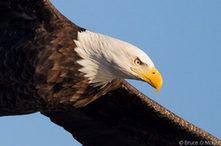
Photo by Bruce G McKee
Several club members have been photographing Bald Eagles recently at the Lock and Dam 14 on the Mississippi River near LeClaire, IA (near Bettendorf and Davenport). This is a great place to get pictures of the Eagles swooping down to the river to catch a fish with their talons as well as pictures of the birds flying or perched in nearby trees. The best time of the year is January and February. You can learn more about this photo opportunity by reading recent Blog postings by club members:
Bruce's Blog - Bald Eagles at Lock and Dam 14

Harsha's Blog - Photographing Bald Eagles, Lock and Dam 14, Mississippi River 2013


2 Comments

Bird Feeder Photos

12/11/2012

2 Comments

 
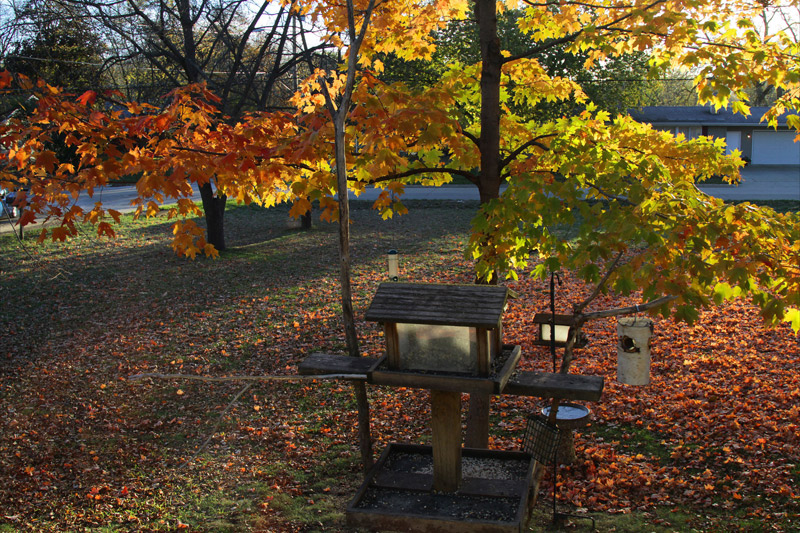
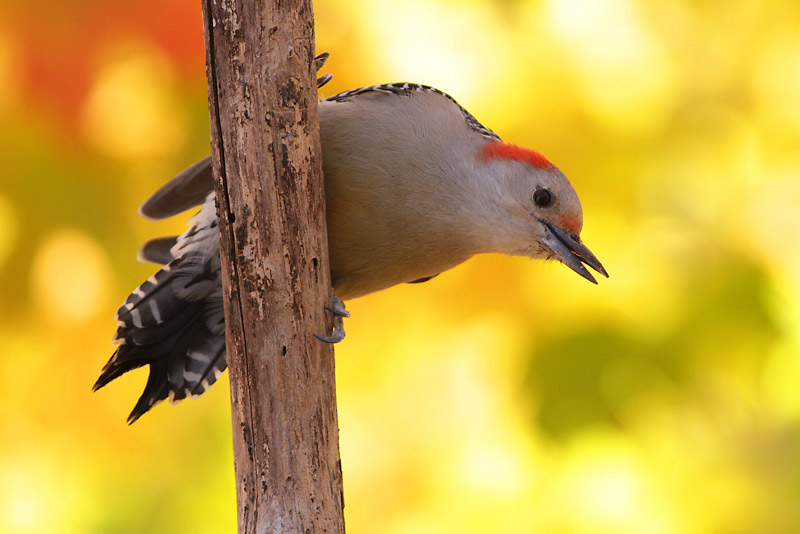
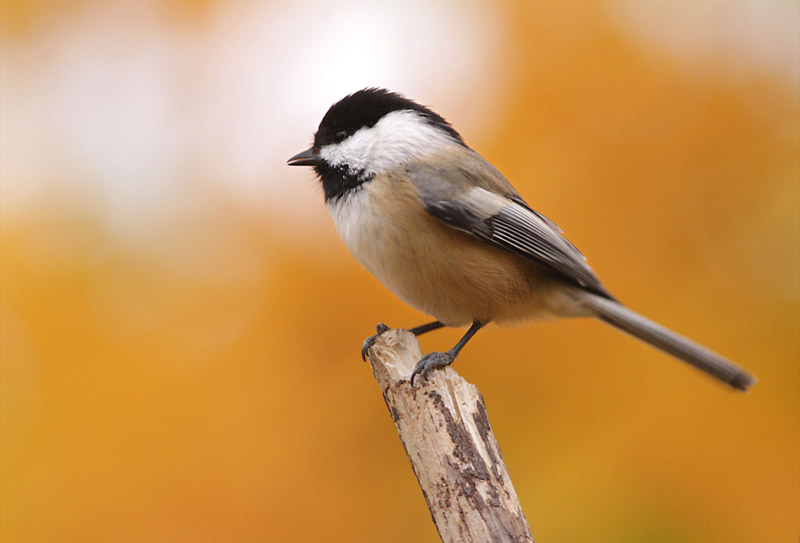
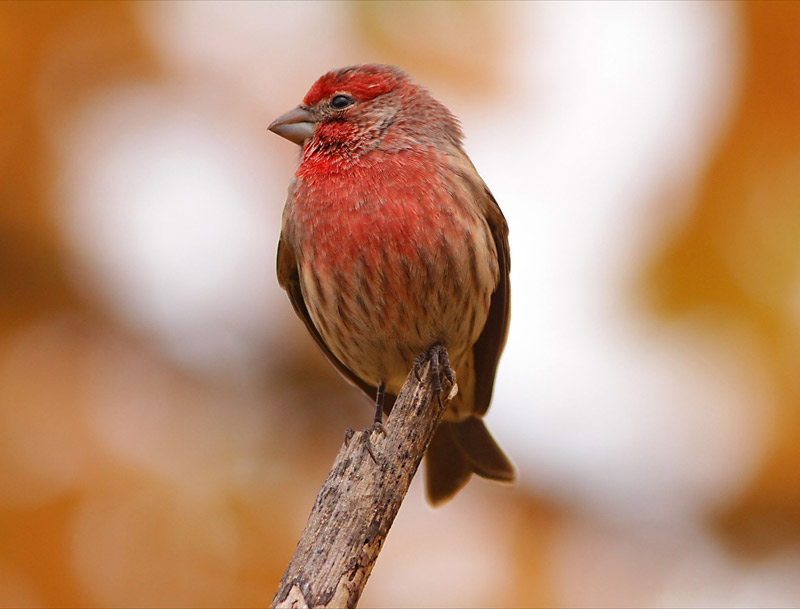
An easy way to get close up photos of all kinds of different birds is to put up a bird feeder close to a window.  However I have little interest in seeing a bird on a bird feeder.  So I screw a few tree branches to my feeder, and then photograph the birds on the branches.  I put my bird feeder on a big 2 by 6 board to enable easily attaching branches.  In the examples I give here, I waited until autumn to take these.  I put the bird feeder between the window and a hard maple, so when the maple turned in autumn, I could have nice background colors.  Now I am waiting for snow to get a bright red cardinal on some snow!  It is easy, it is fun, and I like having the birds close to the window.  I shoot with the window open when the weather is nice, and when it is not I clean the glass good and shoot through the glass.  I use a 400 mm lens.
   - Jack Vanden Heuvel
                           (click photos below to see larger images)
Picture
Back yard photo set up.
Picture
Red-Bellied Woodpecker
Picture
Chickadee
Picture
House Finch
2 Comments

Our new Blog site

10/10/2012

1 Comment

 
Welcome to the North Iowa Photo Club blog. Our club meets at Rolling Acres Christian Reformed Church, 340 19th Street S.W., Mason City, IA the
third Thursday of the month from 7 – 9 PM. Everyone is invited to learn about photographic techniques, how to operate your camera and to view photos taken by other club members.  Our Blog is a place to learn about club meetings and to share photo tips. Bookmark the page or save it to your favorites so that you can easily find your way back here. Please also request to be added to our email list so that we can send you updates about club meetings (such as photo outings held at regular meeting times).
1 Comment

    Photo Club Blog

    Periodic postings about club activities and photographic techniques from the members of the North Iowa Photo Club.

    Archives

    September 2016
    February 2015
    October 2014
    April 2014
    February 2014
    January 2014
    August 2013
    June 2013
    May 2013
    April 2013
    February 2013
    January 2013
    December 2012
    November 2012
    October 2012

    Categories

    All
    Aurora
    Birds
    Club
    Contest
    Landscapes
    Meetings
    Nature
    Northern Lights
    Photo Tips

    RSS Feed

Powered by Create your own unique website with customizable templates.